ORDU Metropolitan Municipality
TOTAL SCORE
Based on its total score for good governance, the municipality is in Tier 6 (45–54 points).
Good Governance Principles
Institutional Processes
Continuous Learning
Assessment of Good Governance Principles
Tier 3 (75–84 points) for Effectiveness & Efficiency. The municipality performs this principle more successfully than the other principles.Effectiveness & Efficiency means producing the best possible and intended outcome without wasting resources. For this principle, there is a minor area of improvement for the municipality.
Tier 5 (55–64 points) for Responsibility & Responsiveness and Transparency. Responsibility & Responsiveness require municipalities consider the needs, expectations and rights of both today’s citizens and the future generations while planning. Transparency is important for building trust in municipalities and enables monitoring and assessment for continuous development. These principles point out essential areas of improvement for the municipality.
Tier 6 (45–54 points) for Representation & Participation. Active participation of stakeholders, especially in the planning of service provision and investments, is important for meeting expectations and citizen satisfaction. This principle points out important areas of improvement for the municipality.
Tier 7 (35–44 points) for Fairness & Inclusiveness. Fairness & Inclusiveness require municipalities to take the needs of different social groups into consideration, and to plan its services, activities, and its investments accordingly. This principle refers to primary areas of development for the municipality.
Tier 8 (25–34 points) for Accountability. Accountability is important to gain and maintain the trust of stakeholders for the municipalities. This principle refers to primary areas of development for the municipality.
Tier 9 (15–24 points) for Consistency. Consistency requires harmony between the activities and plans of municipalities and those of stakeholders. This principle is the foremost area of development for the municipality.
We see that the municipality still needs to improve its approach to good governance and practices of good governance in its institutional functioning.
Good Practice
The municipality shares expectations, demands, and requests of the stakeholders collected through the strategic planning process in its strategic plan.
Related Governance Principles
Responsibility & Responsiveness
Representation & Participation
Related ELoGE Principles
Principle 1: Participation, Representation, Fair Conduct of Elections
Principle 2: Responsiveness
Related SDGs and Targets
SDG 16
Target 16.6. Develop effective, accountable, and transparent institutions at all levels.
Target 16.7. Ensure responsive, inclusive, participatory, and representative decision- making at all levels
Related OECD Wellbeing Indicator
Civic Engagement
Importance of the Practice
Sharing expectations, demands, and requests from stakeholders enables the monitoring of how these comments have been reflected in decision making and strategic planning processes. This practice also permits follow-up, i.e., observing if these plans have been realized through performing activities and allocating resources. If this process is performed effectively, it can be considered as a meaningful participation process.
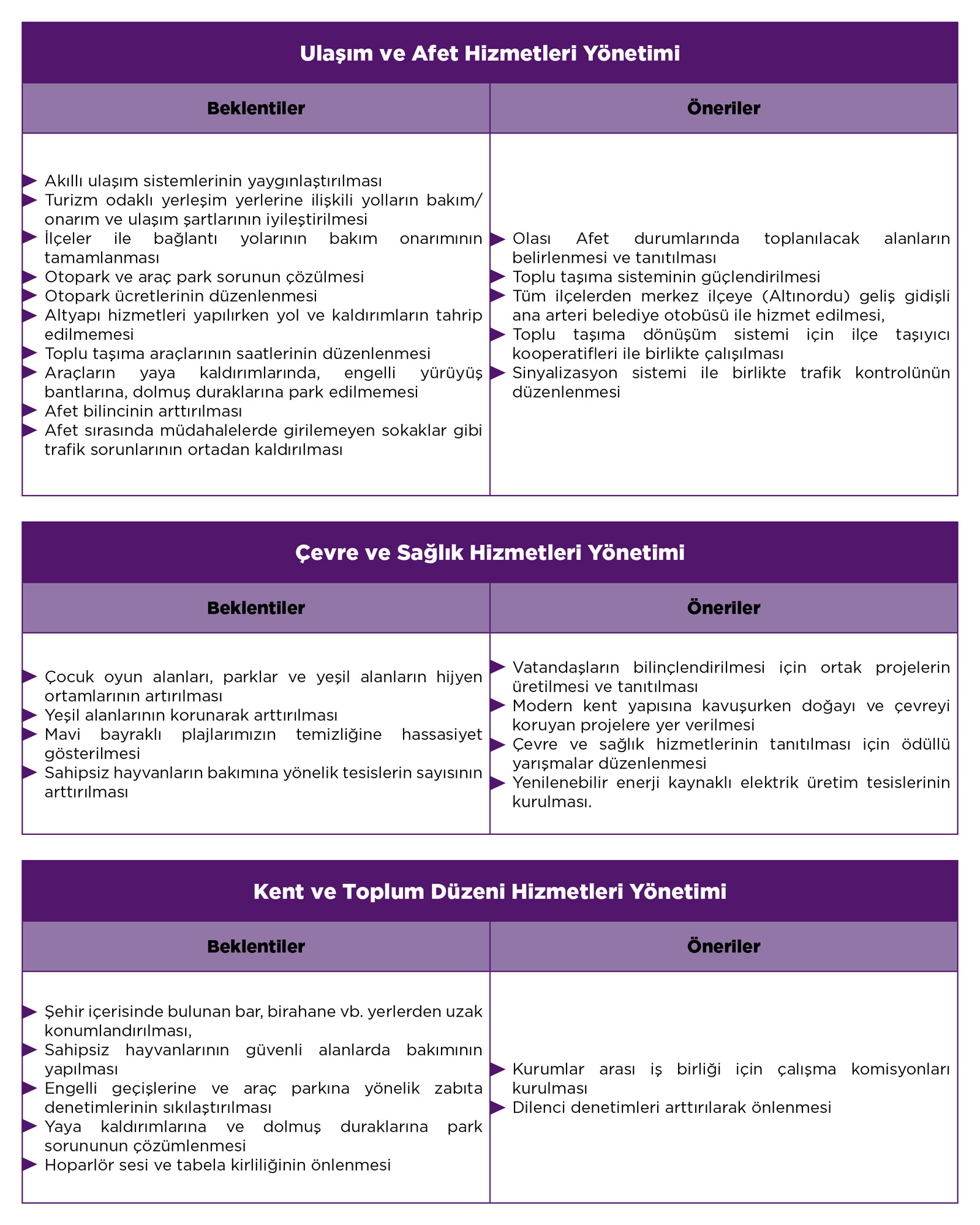
Source: Ordu Metropolitan Municipality 2020–2024 Strategic Plan, page 58